Building Prospect Lists With AI Research Agents
AI agents automate the research grunt work that eats up your sales team's morning.
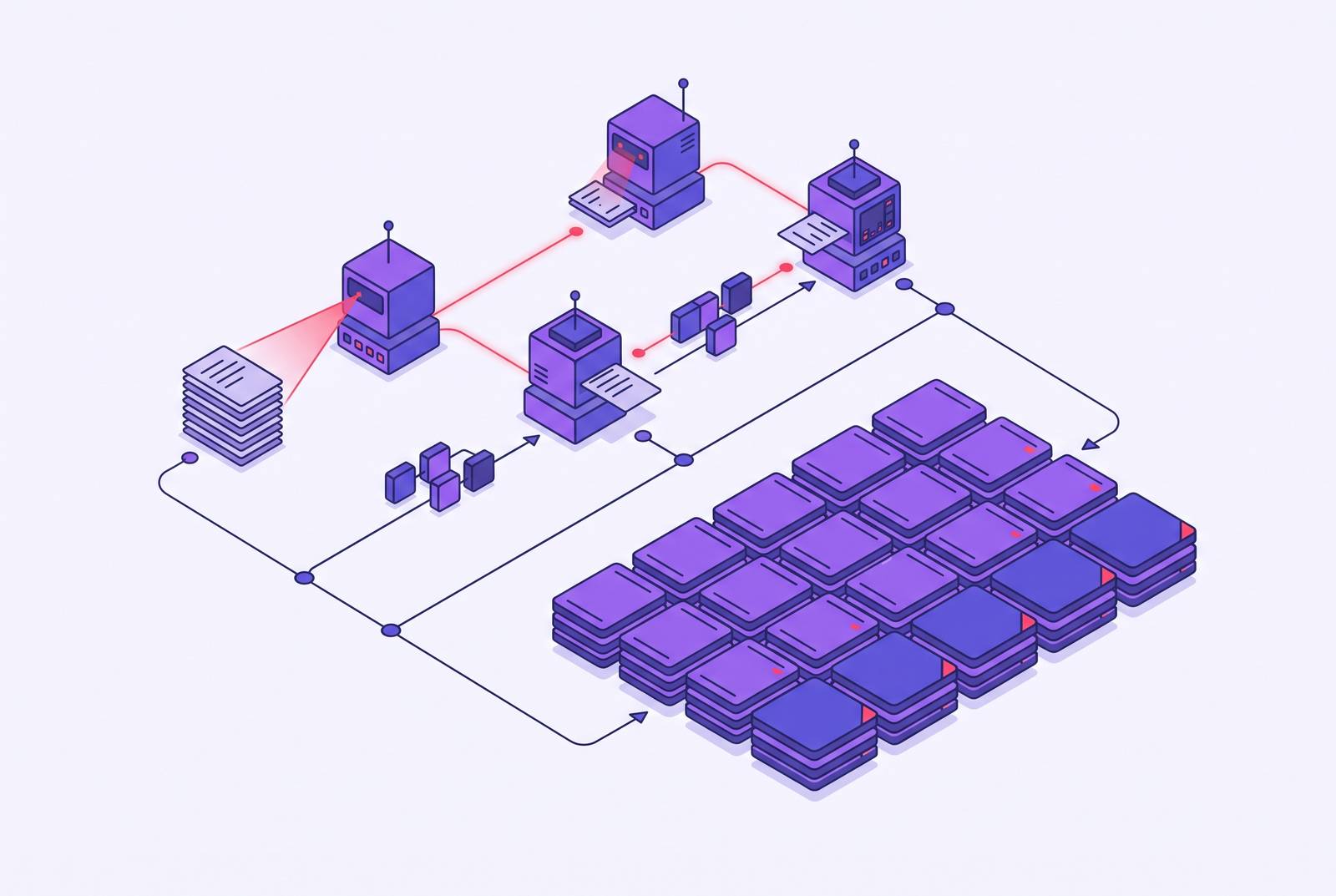
Building a prospect list used to mean a rep with a spreadsheet, a LinkedIn tab, and a couple hours to burn before lunch. That model is dead in any sales org that's paying attention, and what's replaced it is a layered workflow of AI research agents handling ICP encoding, enrichment, and signal detection in sequence, not a single tool doing everything at once. The teams booking meetings understand which layer of that workflow they're actually operating in. The teams with impressive dashboards nobody checks usually don't.
The daily grind that made this necessary hasn't gone away, it's just been redistributed. Account research, list building, CRM cleanup, and outreach personalization can eat an entire morning before a rep sends a single email. Ten to twenty minutes of research per account, multiplied across dozens of prospects a week, is not a rounding error. It's the job. Industry surveys covering the 2025-2026 window put AI adoption among sales teams somewhere between 81% and 87%, with only 8% to 12% saying they don't use it in any capacity. That's not an experimental technology anymore. Industry surveys covering the 2025-2026 window put AI adoption among sales teams somewhere between 81% and 87%, with only 8% to 12% saying they don't use it in any capacity, making it the default rather than an experimental technology. Salesforce's State of Sales research found sellers expect AI agents to cut prospecting research time by 34% once fully rolled out, which is the number that explains why every sales leader is suddenly fluent in terms like "waterfall enrichment" and "buying signal."
What AI research agents are, and how the category has split into three layers
An AI research agent isn't a chatbot with a sales script. A chatbot answers one question and stops. An agent takes a goal, plans a sequence of steps to get there, pulls from more than one source, synthesizes what it finds, and hands back something structured, a list, a brief, a scored account. Tell it "find 20 qualified fintech prospects with a Series B in the last year" and a real agent will search, filter, research each company, enrich the contact records, remove duplicates, and push the result into a CRM, adjusting its approach along the way if a data source comes back thin.
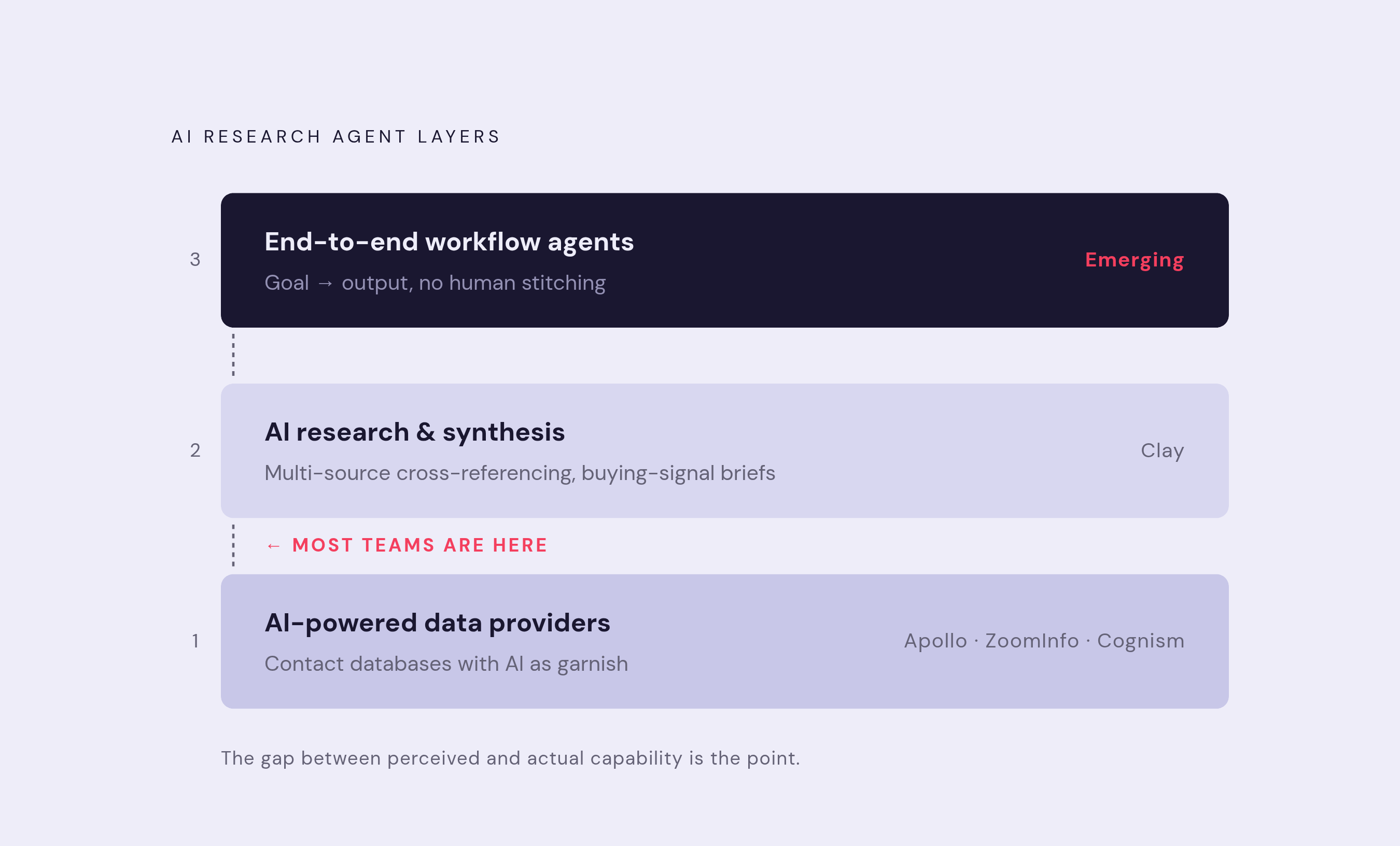
The category selling itself under this label has split into three layers, and vendors and buyers often use the same word to describe different things.
Layer one is the AI-powered data provider. Apollo, ZoomInfo, and Cognism sit here: contact databases first, with AI features added on top like autocomplete or a scoring model. The data is the product. AI is the garnish.
Layer two is AI research and synthesis. These tools pull from several sources at once, cross-reference them, and produce something closer to a research brief or a buying-signal alert rather than just a contact record. Clay is the platform most often cited as the example of this layer done well.
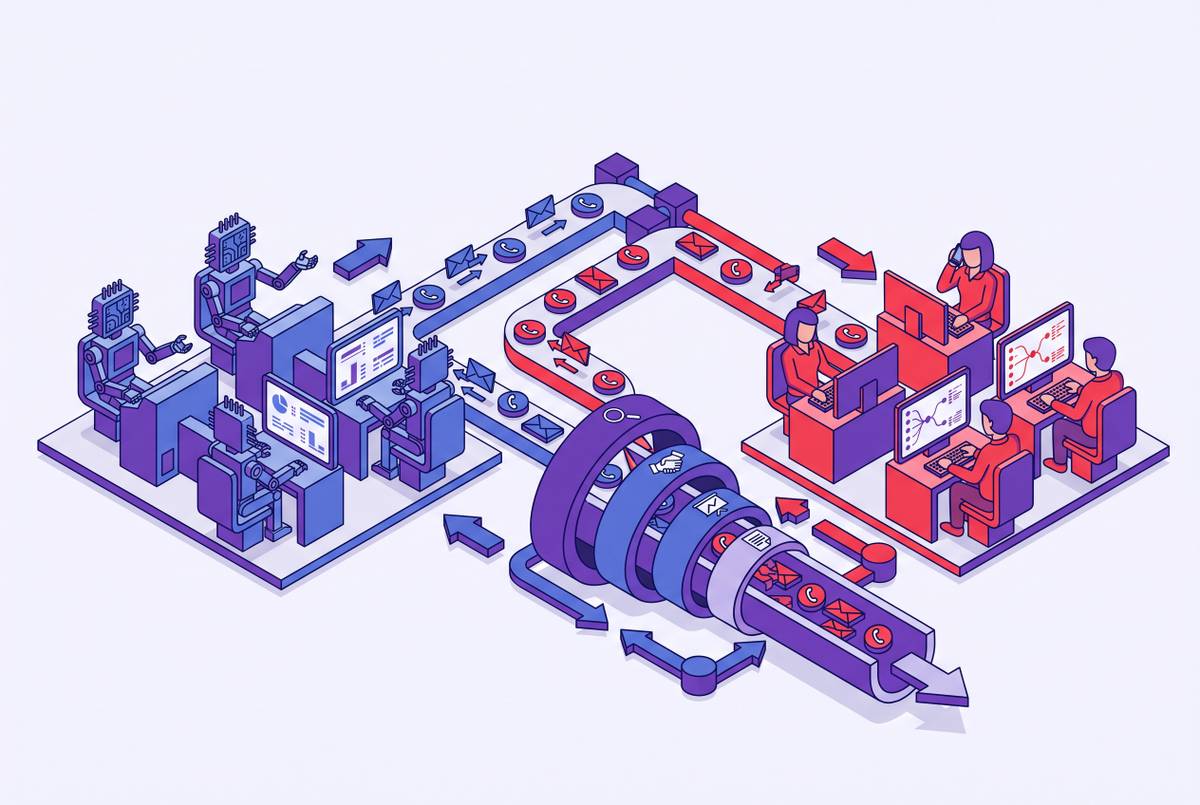
Layer three is where agents chain an entire workflow end to end, taking a goal and executing every step without a human stitching the pieces together manually. This is the direction the category is moving, but it's not where most teams currently sit. Practitioners observing this space have noted that most teams believe they've reached layer three when they're still stuck in layer one, a database with autocomplete, dressed up to look like autonomy.
Step one: encoding your ICP so the agent has something real to work from
None of the later steps matter if the ideal customer profile feeding the agent is vague or outdated. Every AI prospecting workflow starts with encoding the ICP, because an agent can only be as precise as the criteria it's told to search against.
A workable ICP for this kind of prospecting spans three dimensions. Firmographic covers company size, industry, revenue band, and geography, the basics that show up in any database filter. Technographic covers what tools a company currently runs and, more usefully, what it's likely to rip out and replace. Behavioral covers hiring patterns, funding events, and organizational churn, the signals that hint at when a company is about to be in the market for something new.
The preferred method going into 2026 is deriving the ICP from won-deal data run through an LLM, rather than guessing from a committee's assumptions about who the "ideal" buyer should be. Committee consensus tends to drift from the customers a team has actually been closing. Once the ICP is encoded this way, the agent can refresh the target account list on its own, continuously, without a rep opening a search tool every Monday morning to redo work that should already be done.
Step two: waterfall enrichment fills in what databases miss
Waterfall enrichment means querying data providers in sequence rather than betting everything on one. If the first provider has no match or a stale record, the second one gets tried, then the third, until the gaps get filled or the list runs out of sources to check.
Clay is the platform most cited for running this workflow, and for good reason: it connects to somewhere between 100 and 150-plus data providers, and its agents can visit a company's website, read through a LinkedIn profile, and pull out specific details based on a custom prompt written by whoever built the workflow. The interface looks like a spreadsheet, but each column can chain a data lookup, an AI analysis step, and a formatting rule, one after another.
The reason single-source tools eventually fail isn't a mystery, it's structural. Apollo enriches from its own database, and when a record in that database goes stale, there's no second source to catch the mistake. A contact who changed jobs six months ago still shows the old title. An address flagged "valid" still bounces. A phone number connects to whoever has that extension now, not the person the CRM thinks it does. Data accuracy on single-source tools can degrade somewhere in the 20% to 30% range for SMB accounts and niche verticals, precisely the segments where the big databases have the thinnest coverage to begin with.
A representative enrichment agent workflow, drawn from a hypothetical case at a company called Northstar Systems, runs like this: find accounts matching the ICP from approved data sources, research each one (website, leadership team, hiring activity, tech stack, recent announcements), enrich the contact info, flag buying signals, score the resulting list, draft the outreach message, and stop, waiting for a human to approve before anything gets sent. That last step matters. The agent does the labor; a person still decides what goes out the door.
Step three: signal detection is what converts enriched data or leaves it unconverted.
An enriched list full of companies that match the ICP on paper is not the same as a list of companies ready to buy right now. Signal detection separates the two, distinguishing building a list from building pipeline.
Signals split into two categories. First-party signals come from a company's own digital footprint: website visitor identification, form fills, content downloads, email engagement. Third-party signals come from everywhere else: content consumption on external sites, competitor research activity, job postings that hint at a new initiative, and technographic shifts that suggest a company is about to swap one vendor for another. Going into 2026, the most reliable signals across these categories tend to be hiring data, technographic change, funding events, content engagement, and direct visits to review sites like G2 or Capterra; this behavior is hard to fake and easy to time against.
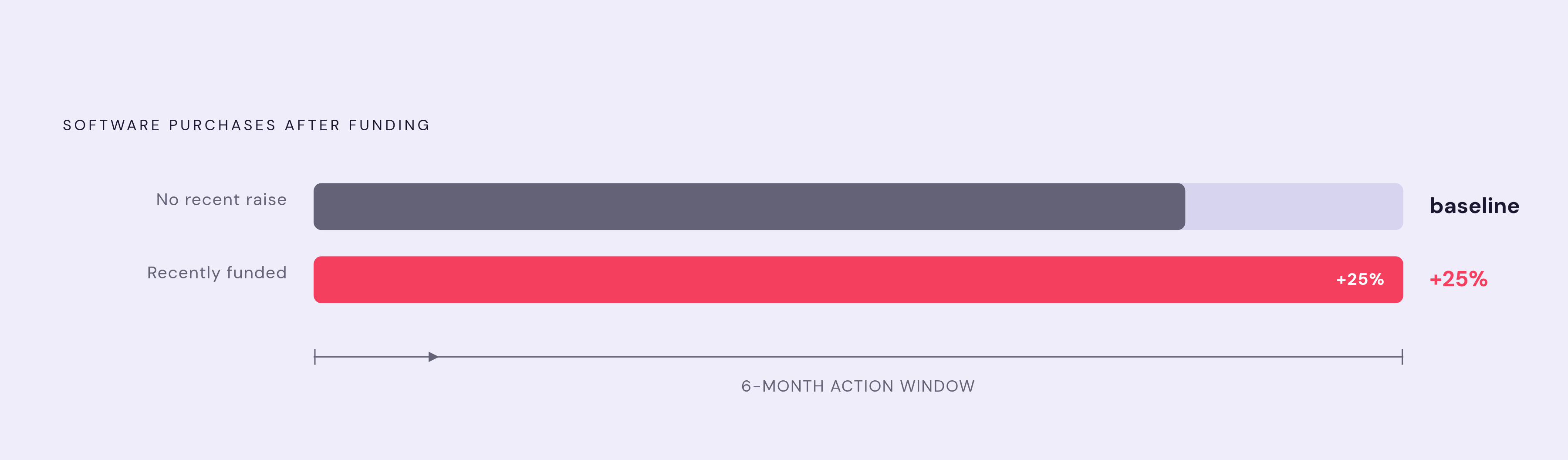
A handful of providers specialize in exactly this: Bombora, G2 Buyer Intent, Demandbase, and 6sense, the last of which Forrester named a Leader in its 2026 Wave for Revenue Marketing Platforms in B2B. Funding events deserve particular attention as a signal, because the pattern behind them is well documented. Research into B2B software purchasing patterns found that companies which had recently closed a funding round made 25% more software purchases in the following six months than companies whose last raise was further in the rearview mirror. Fresh capital doesn't sit still. It gets spent on new tools, and a sales team that can spot the round closing has a six-month window most competitors are researching their way past.
The platform landscape: what each major tool does and where it breaks
ZoomInfo positions itself as an all-in-one AI go-to-market platform, and the scale backs up the framing: over 500 million contacts, 100 million companies, more than 135 million verified phone numbers, and a claimed 1.5 billion-plus data points processed daily, with over 200 million verified business emails and 120 million direct-dial numbers in the mix. Its GTM Context Graph pulls together CRM history, conversation intelligence, behavioral intent, and the underlying B2B data to surface who to call, when to call them, and roughly what to say. Seismic reported saving 11.5 hours using the platform and attributed 39% of pipeline to signals sourced from a B2B data provider; Smartsheet documented an 84% lift in marketing qualified leads. Pricing runs on a consumption-credit model that avoids seat minimums, and Forrester credited ZoomInfo with the largest R&D investment of any provider in its Q1 2025 Wave. The platform's real strength appears in enterprise deals with complex buying committees, where the volume of intent data and contact coverage actually gets used.
Clay trades scale for flexibility. Its value is the waterfall enrichment engine described earlier, connecting to well over a hundred data providers and letting agents crawl websites and LinkedIn profiles on custom instructions, all inside a spreadsheet-style interface. The tradeoff appears in the bill: API costs can run past $800 a month once a team is enriching 5,000-plus contacts through four or more waterfall providers stacked in sequence. Clay suits teams that want to design their own research chains rather than adopt someone else's pre-built workflow, which is also why it costs more to run at volume.
Apollo.io sits at the accessible end of the market. Its database covers a substantial number of contacts, with AI-driven sequencing, automated lead scoring, and a Chrome extension built into a plan that starts at $49 a user per month, on top of a free tier that actually functions. Its limitation is structural rather than incidental: Apollo enriches from its own database with no waterfall fallback, so a stale record has nowhere else to be checked against. That's the same 20% to 30% accuracy degradation problem described above, concentrated in SMB accounts and outside North America, where Apollo's coverage thins out. Old titles after a role change, addresses marked valid that still bounce, phone numbers that ring the wrong desk: the failure pattern is consistent. For a team building its first AI-assisted prospecting workflow, Apollo remains a reasonable entry point, particularly for North American enterprise contacts where its database is deepest.
Autonomous AI SDR agents: what the end-to-end pitch delivers
2026's AI lead-gen tools split into two camps: platforms that run prospecting autonomously start to finish, and enrichment databases that still need a human stitching the steps together.
11x.ai makes the more aggressive pitch of the two, built around a digital worker named Alice who owns outbound end to end, researching prospects, writing and sending personalized messages, managing follow-ups, handling basic objections, and booking meetings on her own. A second agent, Jordan, handles phone calls autonomously in more than 30 languages. It's the most direct "replace the headcount" framing in the category, and the company's credibility took a hit in 2025 after a leadership shakeup that saw CEO Hasan Sukkar step down into a non-executive chairman role, undercutting the boldness of the pitch.
Artisan, built around an agent named Ava, sources from a database of a substantial number of B2B contacts and runs its own waterfall enrichment before moving into multichannel outreach, autonomous replies, and meeting booking. Instead of a simple on-off switch, Artisan uses an autonomy dial, and the company reports that more than 90% of its customers run Ava fully autonomously rather than dialing back human oversight. That level of autonomy raises a fair question for any buyer evaluating this category: where does the contact data actually come from, how does the platform handle compliance, and does it hold real trust relationships with the major data ecosystem partners it depends on? Outreach automation is the easy part to demo. If the outreach lands anywhere useful depends on data provenance.
HubSpot Breeze takes a narrower but practical approach, inferring a company's value proposition and ICP directly inside existing workflows and using that inference to build selling profiles, target personas, and value propositions for its prospecting agent to work from. It's less a replacement for a research stack and more a way of getting an ICP encoded (the earlier step-one need to define an ICP) without asking a revenue team to define it by committee.