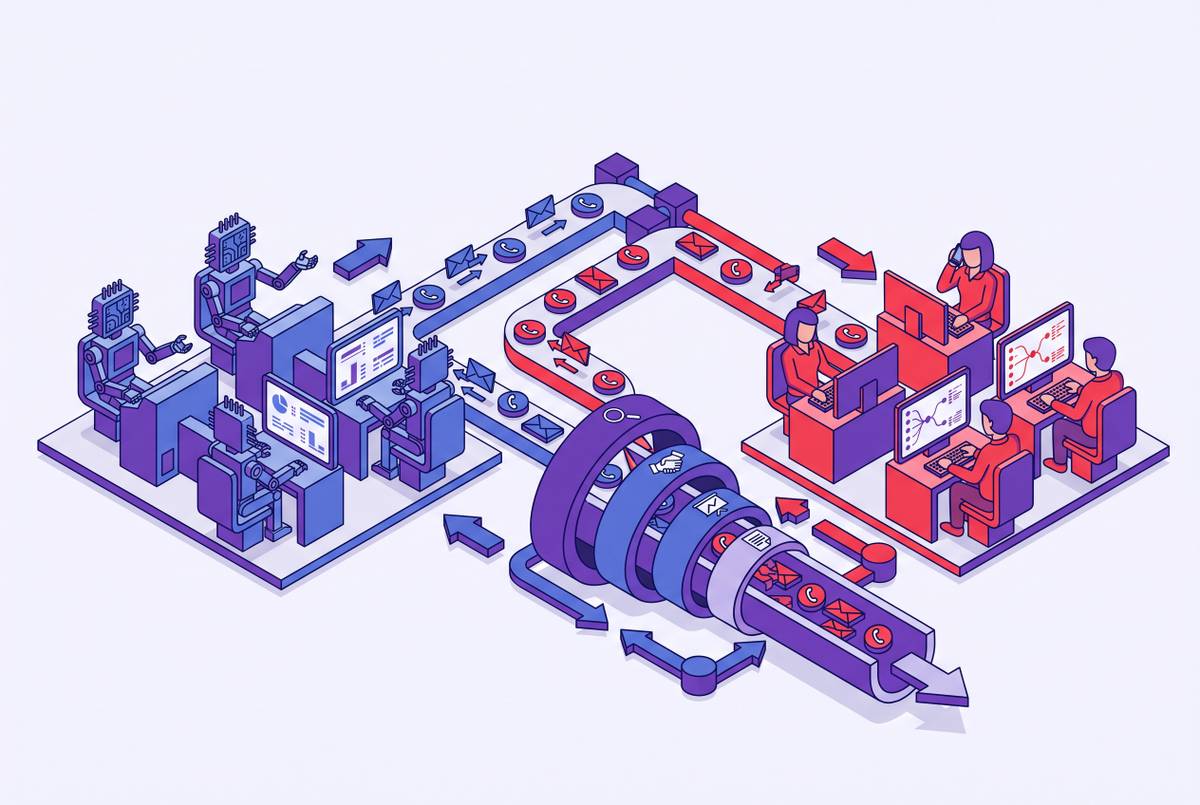
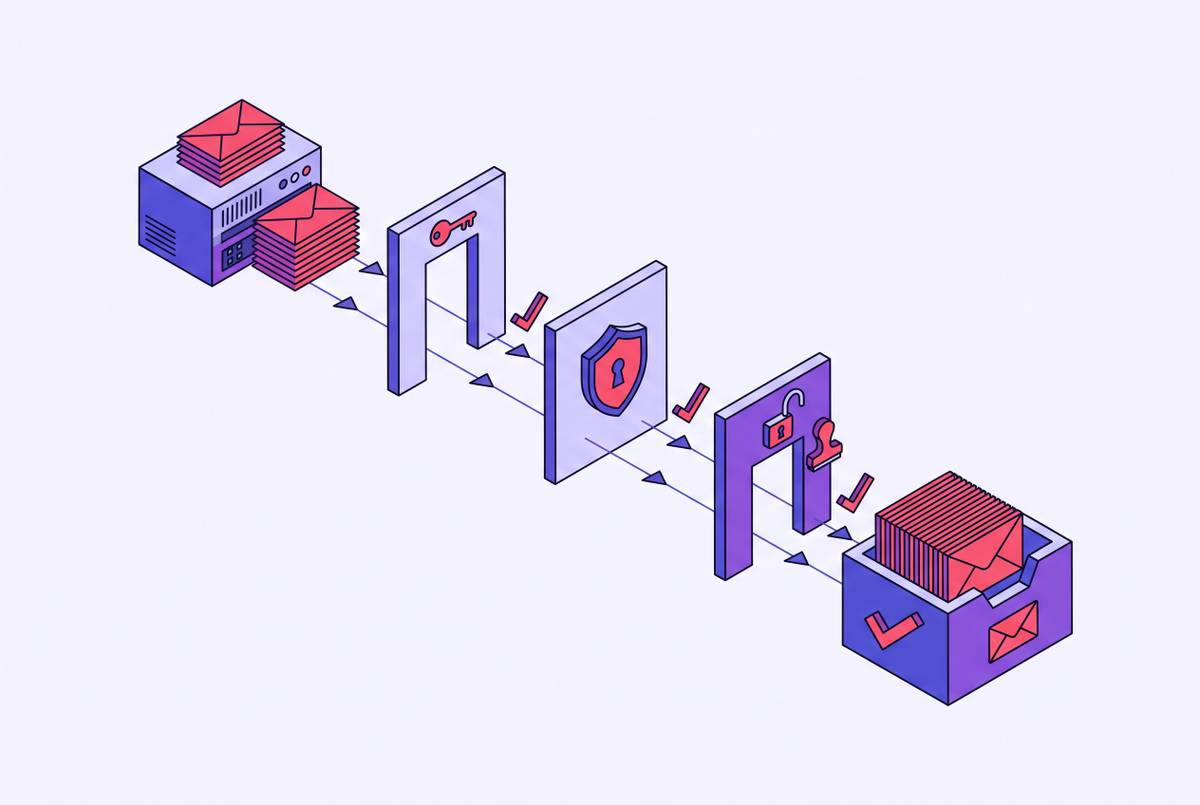
AI-Assisted Deal Scoring and Stall Detection for AEs
AI identifies which deals are genuinely at risk, not just quiet, so reps can intervene early.
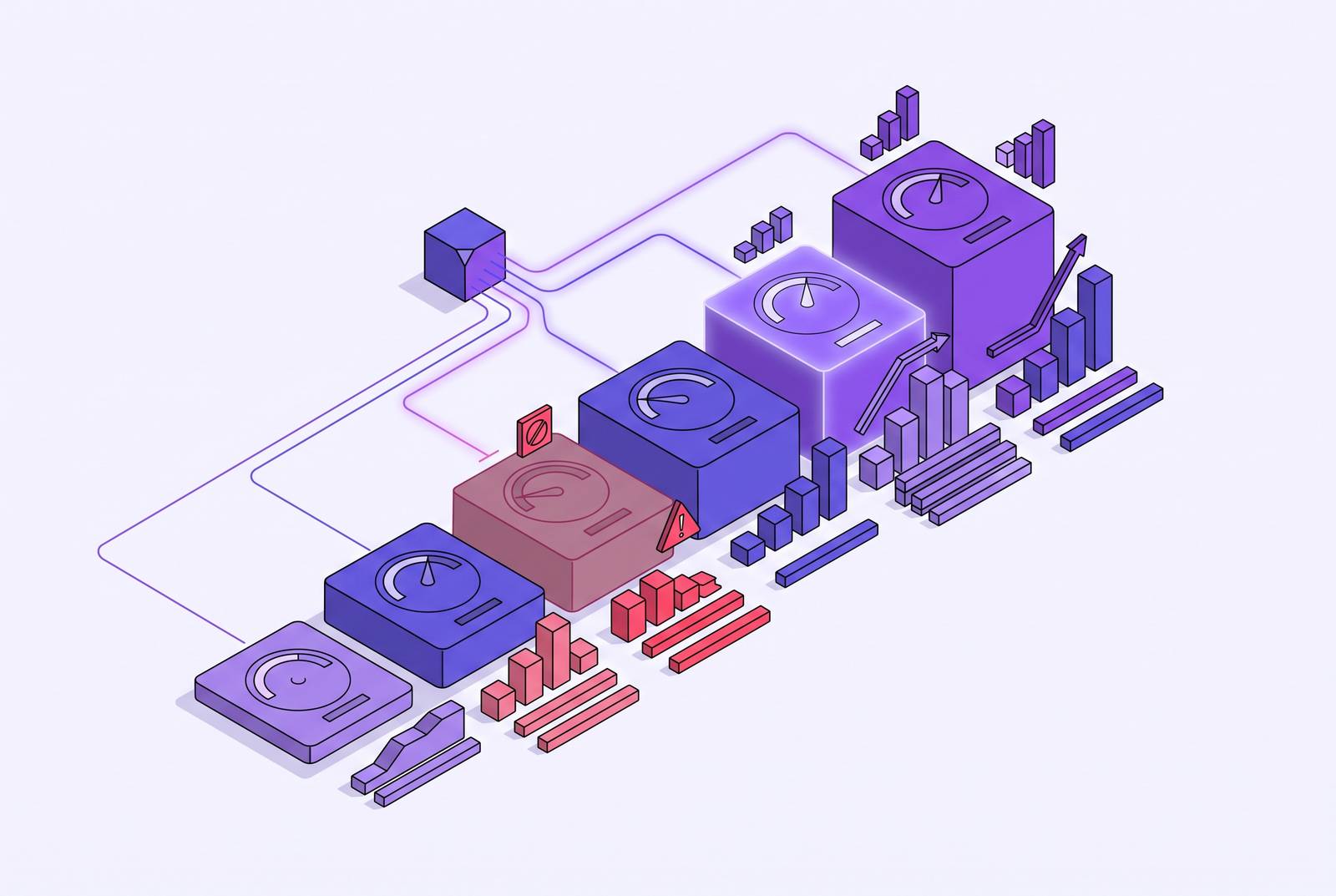
AI deal scoring gives sales reps a continuously updated, evidence-based read on which deals in their pipeline are healthy and which are quietly dying, built on buyer behavior instead of gut feel. Most sales orgs still forecast on subjective judgment dressed up as process, and that habit is the thing actually worth attacking here.
What AI deal scoring does (and what distinguishes it from activity tracking)
The standard forecasting loop runs like this: reps update stage and close date, managers ask them to defend the number on a forecast call, and everyone nods along based on whatever the rep's intuition says that week. It's a system built on self-reported confidence, not observed behavior. Frameworks like BANT and MEDDIC don't fix this. They still depend on a rep filling in boxes based on what they believe about the buyer, not what is measurably happening on the buyer's side.
AI deal scoring closes that gap by watching what actually occurs across dozens of data points, then comparing those signals against a company's own history of closed-won and closed-lost deals. It trains on an organization's own patterns, not generic industry benchmarks. If enterprise deals that close tend to involve a certain depth of stakeholder engagement and at least one executive touch, the model learns that. If lost deals tend to stall in a particular stage past a certain number of days, it learns that too. Once trained, it scores active deals continuously, not once a quarter: email opens, meeting no-shows, competitor mentions, close-date slippage all feed a probability score, usually 0 to 100 or a tiered High/Medium/Low label, updating as new signals arrive.
Most of what gets sold as "AI deal scoring" doesn't clear that bar. A lot of it is activity tracking wearing an AI label, so buyers paying for pattern-based prediction may instead be getting a system that only confirms a CRM field was updated recently. Fullcast's 2026 guide draws the line directly: plenty of platforms measure whether an opportunity has recent activity logged in the CRM, not whether that activity resembles the pattern of deals that actually close. Counting touches isn't detecting deviation from a winning pattern. Genuine scoring flags when a deal looks statistically different from the deals that historically closed. Activity tracking just tells you someone sent an email last Tuesday, which is a different claim entirely and a much weaker one.
If the underlying data is garbage, none of it works. A model trained on inflated stages, invented close dates, and missing activity logs still produces a confident-looking score. It's just confidently wrong.
The behavioral signals AI monitors that human review routinely overlooks
Reps managing a full pipeline can't track dozens of shifting signals across every open deal at once. That's not a knock on effort. Pattern recognition at that scale isn't something a human brain does well under time pressure, and it's exactly the task machine learning models were built for.
Email engagement velocity matters most early: a slowing response cadence is one of the more reliable indicators of disengagement, often visible weeks before a rep would notice anything off in a call. Multi-threading depth counts too, meaning how many stakeholders are engaged, at what seniority, and whether an executive has ever entered the conversation. Sentiment shifts across email and call transcripts, including hedging language or an offhand mention of a competitor's name, round out the picture. Meeting behavior adds another layer: cancellations, no-shows, calls that run short, attendees quietly dropping off the buyer's side. Timeline drift closes the loop, where close dates keep moving and stage durations run long against historical norms for similar deal sizes.
Champion engagement deserves its own callout, because it's the pattern reps miss most often. A single-threaded deal is a recognized risk, and when the one internal sponsor a rep has been leaning on goes quiet or switches roles, a human might miss that for weeks. A model built to watch for it won't.
Website behavior counts too. Website engagement signals from buying-committee members can, in a system built for this, inform more targeted follow-up tied to the account's documented pain points.
Set against all that, AI can't sense that a champion is unhappy in her role for reasons that have nothing to do with the deal, and it can't pick up on internal politics or a relationship history. AI reads signals, not people. It can't sense that a champion is unhappy in her role for reasons that have nothing to do with the deal, and it can't pick up on internal politics or a relationship history a rep might know firsthand. That layer of judgment stays human.
How stall detection closes the gap between risk and action
Stall detection cross-references what's happening in a live deal against the historical shape of deals that closed, flags the deviation, and does it early enough that a rep can actually respond. Most sales orgs see the top of the pipeline clearly and the bottom, what closed or died, just as clearly. What's missing is the middle: the stretch where deals go quiet before anyone notices. Stall detection exists to cover exactly that blind spot.
A good stall flag reads specifically. "No executive engagement in 14 days." "Single-threaded on a deal above [threshold] in contract value." "Deal has sat in negotiation significantly longer than the historical average for deals this size." A flag that just says "at risk" gives a rep nothing to act on. A flag that names the mechanism gives them somewhere to start, and that difference is the whole argument for building stall detection this way rather than the vaguer alternative.
Detection alone doesn't move revenue, and platforms that treat the alert as the finish line are getting this backwards. A risk score matters once it triggers an intervention workflow, a coaching prompt for the manager, or a specific next action for the rep. Stopping at the alert just hands the hardest part of the job back to the person who was already missing the signal. A complete system also tracks whether the intervention worked, and learns over time which responses move the needle for that specific team, since what closes a mid-market deal at one company doesn't necessarily close one somewhere else.
The payoff appears in the forecasting numbers. Practitioner analysis of Clari deployments, read alongside Gartner's research on CRM data hygiene, points to forecast accuracy gains in the range of 20 to 30 percent when a predictive model runs on clean data. That figure carries one condition that can't be waived: the data has to be reliable before the model ever touches it.
Recovery tactics that move stalled opportunities
The instinct when a deal gets flagged is to send another check-in email. Resist it. "Just wanted to follow up" tells the buyer the rep has nothing new to say, and it tends to accelerate the disengagement it's meant to reverse.
Direct honesty works better, even though it feels backwards the first time a rep tries it: ask the buyer whether internal priorities have shifted. Giving someone explicit permission to say "not right now" removes the social awkwardness of ghosting a rep, and it often reopens a conversation a vague check-in never would. It feels like conceding ground, but in practice it reveals the real blocker faster than persistence does.
Multi-threading is the other lever, and it maps directly onto the diagnosis rather than sitting apart from it. If the model flagged a deal as single-threaded, the fix is to find other stakeholders: laterally into other departments, or up to executive-to-executive contact if the mid-level champion has stalled out. The recovery tactic answers the risk pattern instead of ignoring it.
Signal-triggered personalization matters just as much. If the system flags a pricing-page revisit from a specific buying-committee member, the follow-up should name that visit and tie it to a pain point already documented for the account. A generic "checking in" message wastes the one piece of specific intelligence the rep actually has.
For managers, a stall flag opens a coaching conversation that "how's the deal going?" never could. A specific alert gives a manager something concrete to work from in a one-on-one, and a well-built system tracks whether the coached response changed the outcome.
None of this replaces judgment. A model can't sense that a champion is about to leave the company or that a CFO quietly rewrote the budget approval process. Treat the flag as the start of a human decision.
Why data quality determines whether AI scoring helps or misleads
AI doesn't improve bad data. It amplifies it, in whichever direction the data already points. A model trained on inflated pipeline stages, unrealistic close dates, and activity logs that don't match reality still produces a confident probability score, and that confidence is the actual danger. A wrong prediction delivered with authority does more damage than an obviously shaky guess, because reps and managers act on it as if it were fact.
Salesforce's own research puts the share of CRM data that's incomplete, stale, or duplicated at 91 percent. Salesforce's own research puts the share of CRM data that's incomplete, stale, or duplicated at 91 percent. Validity's State of CRM Data Management found that 76 percent of organizations believe less than half their CRM data is accurate, and 37 percent say they lost revenue directly because of bad data. Scoring models are working against those odds before they run a single prediction.
Decay isn't a one-time cleanup job, it's ongoing, and it's driven mostly by something mundane: people change jobs. ZoomInfo's Pipeline research puts B2B contact decay at 25 to 30 percent per year, so a 10,000-contact database sheds roughly 2,500 to 3,000 usable records annually if nobody's maintaining it. A contact list built in January is measurably wrong by December, every single year, without exception.
Duplicates compound the problem in a way specific to scoring. A meaningful share of typical contact records duplicate the same individual under slightly different entries, which quietly distorts stakeholder coverage and multi-threading calculations, the exact inputs a scoring model leans on to judge deal health. A deal that looks well-threaded on paper might actually have three records for the same VP and one real relationship.
For scoring to mean anything, the inputs need to hold up: stage progression that reflects reality rather than a rep's optimism, activity logs that match what actually happened, close dates grounded in the sales cycle rather than wishful thinking, stakeholder records that mirror the buying committee as it actually exists. Gartner puts the average annual cost of poor data quality at $12.9 million per organization, which makes this a revenue risk argument, not a data-hygiene footnote, and it applies directly to any scoring system sitting on top of that data. A continuously refreshed contact and account database, maintained through waterfall enrichment, is what keeps a score trustworthy instead of quietly misleading the people who rely on it.
The current structure of the AI scoring and stall detection market: key platforms and what they cover
This capability sits scattered across revenue intelligence platforms, sales engagement tools, conversation intelligence software, and increasingly, all-in-one GTM suites. The market is consolidating fast enough that the boundaries between those categories are blurring in real time, and the clearest evidence of that is a single merger.
Clari and Salesloft merged in December 2025, combining the leading revenue forecasting platform with the leading sales engagement platform under one system, folding forecasting intelligence and execution into a single product instead of two tools stitched together after the fact.
Elsewhere, Gong shows up in SiftHub's April 2026 roundup as a top pick for conversation intelligence and deal risk detection, working inside a rep's existing workflow and surfacing risk from call and email analysis rather than demanding a separate interface. ZoomInfo's GTM Context Graph, paired with its Chorus conversation intelligence, fuses B2B data with CRM records and behavioral signals so the system can reason across them rather than just enriching a contact record. ZoomInfo's own research shows it processes a large volume of data points daily, and Seismic attributed 39 percent of its pipeline to ZoomInfo signals while saving 11.5 hours per rep each week after deployment.
6sense earns a spot in that same SiftHub roundup for buyer intent data and account-based pipeline work, covering top-of-funnel through mid-deal stages with intent signals as the core driver. SiftHub ranks itself first in that same list, source acknowledged, for deal execution and mid-funnel acceleration, describing its approach as agentic deal orchestration connected across a stack that includes Gong, Salesforce, Google Drive, SharePoint, Slack, and Seismic. Its RFP agent reportedly completes 70 to 90 percent of responses automatically and handled over 240,000 questions across customers in six months, with Allego citing 90 percent autofill rates and Superhuman saving more than 8 hours a week.
Highspot was named a Leader in the inaugural 2025 Gartner Magic Quadrant for Revenue Enablement Platforms, scoring highest on Ability to Execute. Its GTM Agent, launched at Spring Launch '26, connects signals across revenue execution into role-specific actions for enablement and revenue operations teams, and Highspot announced a merger with Seismic in February 2026. On the forecasting and planning side, Fullcast has been consolidating aggressively, with reported acquisitions including Atrium for sales performance analytics and Ebsta for revenue intelligence in 2025, now running inside Fullcastt as the AI execution layer within its Plan-to-Pay suite.
Apollo covers a different piece of the puzzle entirely, sitting at the top of funnel with a database built on a vast number of contacts and accounts, integrating prospecting, enrichment, sequencing, dialing, and deal management into one connected system. Its buying signals and waterfall enrichment feed directly into scoring and prioritization, and its AI agents handle list building, personalized outreach drafting, and meeting booking, with integrations spanning CRMs, email providers, and tools like ChatGPT, Claude, and LinkedIn. It suits reps who want signal-driven prioritization without bolting on yet another standalone tool.
The direction across nearly every one of these moves is the same: scoring intelligence and execution are converging into single systems, rather than sitting in a fragmented stack where forecasting lives in one tool, engagement in another, and none of the underlying data agrees with any of the rest of it.